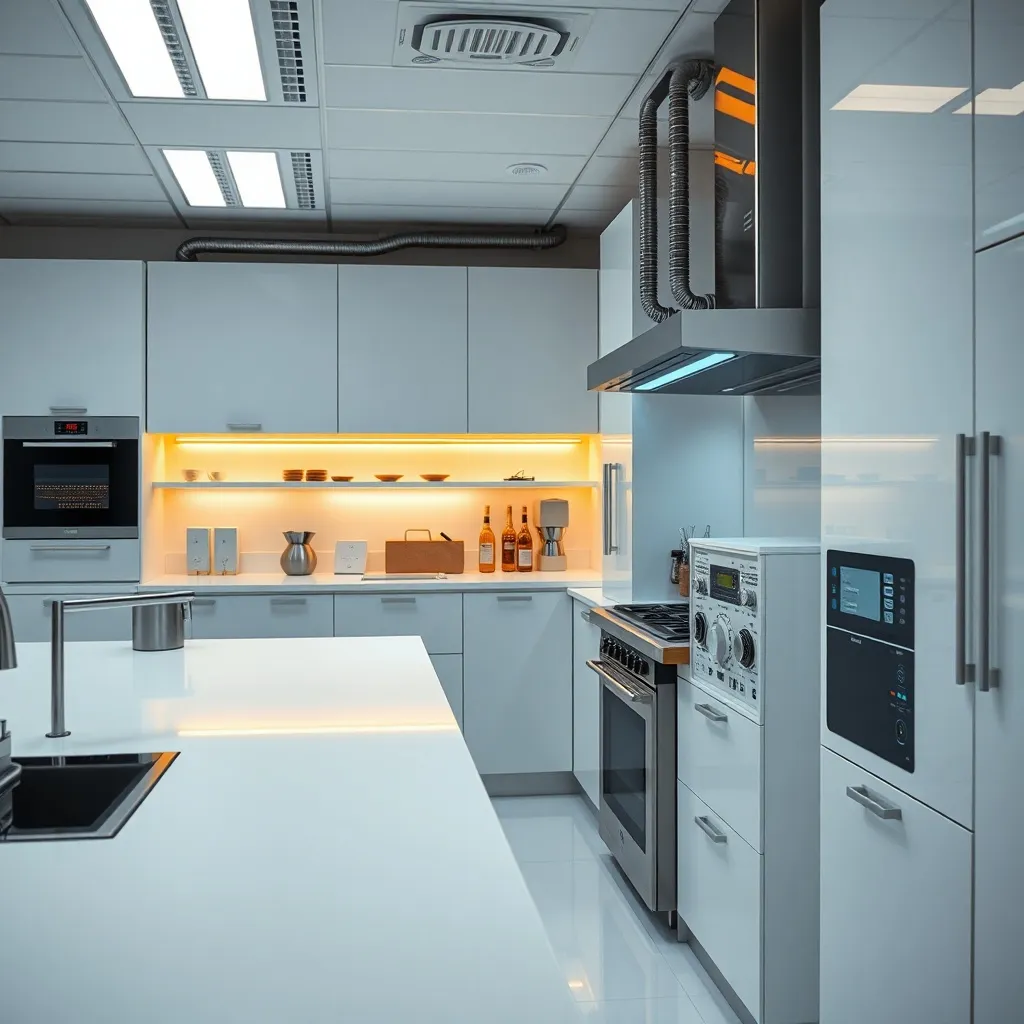
Thermal Management Systems
Analysis of dual-compressor refrigeration units versus single-cycle systems. Results show a 22% improvement in food preservation and a 18% reduction in compressor cycling frequency.
View Case Study →Detailed investigation into the correlation between high-tier hardware procurement and long-term resource conservation. We analyze how initial capital allocation impacts the thermodynamic and electrical efficiency of household infrastructure over a ten-year operational cycle.
Observed efficiency gains when upgrading from Class B to Class A+++ refrigeration units in a controlled environment.
Average conservation volume per household utilizing high-efficiency hydraulic systems in laundry appliances.
The calculated timeframe required for energy savings to offset the delta between entry-level and high-efficiency models.
Our laboratory observations indicate that the primary driver of appliance inefficiency is not merely age, but the degradation of thermal insulation and motor precision. When evaluating the Technical Procurement Guide parameters, it becomes evident that high-end components maintain their nominal efficiency ratings significantly longer than budget alternatives. This is particularly visible in compressor-based systems where friction-induced heat loss accounts for nearly 15% of total energy waste in lower-tier models.
Data collected during our Toronto Retail Market Monitoring suggests that consumers often overlook the "standby" draw of modern appliances. While a single unit may only draw 2-5 watts in idle mode, a full suite of inefficient electronics creates a cumulative parasitic load that can account for up to 10% of a monthly utility bill. Our mission at Simplewoodnote is to highlight these hidden variables to facilitate more informed capital allocation.
In the context of Environmental Resource Conservation, the longevity of a device is as critical as its consumption rate. A machine that lasts 15 years instead of 7 effectively halves the carbon footprint associated with manufacturing and logistical transport. We advocate for a "durability-first" approach, where the initial premium paid for quality is viewed as a pre-paid utility credit for the next decade.
Laboratory Test Results by Category
Analysis of dual-compressor refrigeration units versus single-cycle systems. Results show a 22% improvement in food preservation and a 18% reduction in compressor cycling frequency.
View Case Study →Testing of brushless DC motors in high-capacity washers. Observations include significant noise reduction (12dB) and lower mechanical wear on drive belts over 1,000 cycles.
Allocation Strategy →Direct energy transfer metrics comparing induction to traditional radiant electric cooktops. Data confirms 90% energy transfer efficiency versus 65-70% for radiant units.
Resource Management →Transitioning to high-efficiency appliances is a strategic financial decision that reduces operational overhead while contributing to global resource conservation. Access our full transparency log to see how we track these metrics.